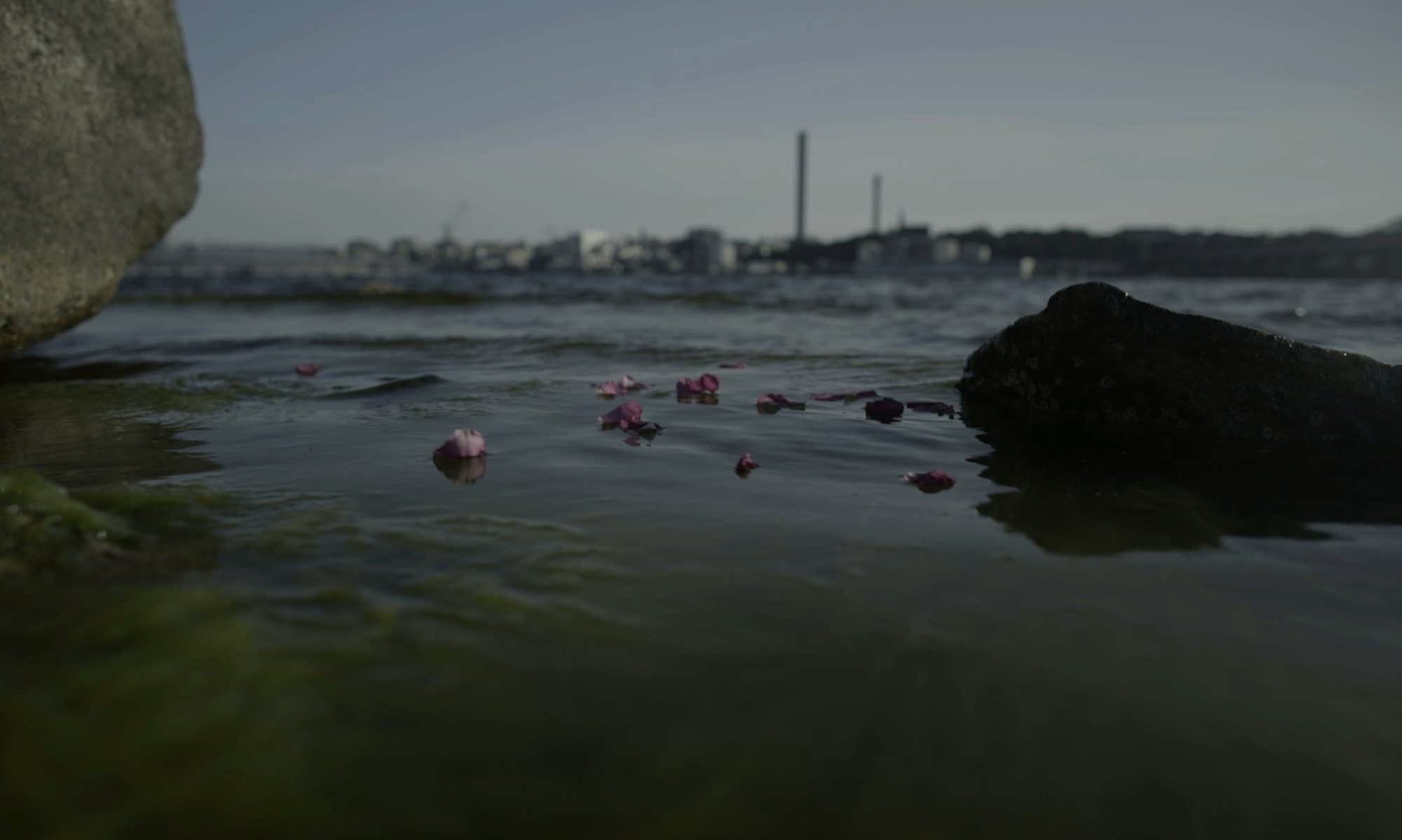
The case of Miguel Ángel Martínez Santamaría was investigated by the Financial Times in June 2024, in one of the most complete international reports ever published on the story. A Spanish man found dead on the shores of Stockholm in 2005 with his heart missing and 60% of his liver gone, Miguel Ángel became the subject of a years-long investigation by his sister Blanca — and, eventually, by journalist Matthew Bremner of FT Magazine. Furthermore, the article documents the multiple inconsistencies in the Swedish police investigation that Blanca uncovered. However, despite years of effort, many questions remain unanswered.
The full article is reproduced below. You can also access the original archived version here: https://archive.ph/WTP6e
Matthew Bremner — FT Magazine, 08/06/2024
One woman’s years-long quest to find out what really happened to her missing brother.
Miguel Ángel Martínez Santamaría: the man who left Spain and never came back
The last time Blanca Martínez Santamaría saw her older brother, Miguel Ángel, he was four months away from turning 45. It was April 2005 when he’d set off by train from their hometown in northern Spain with almost €12,000 in his bank account and plans to travel across Europe.
Blanca always knew her brother as adventurous. He had lived abroad in the past few years and could be restless and unpredictable. Miguel Ángel had been diagnosed with schizophrenia in his early twenties and had even been sectioned. But, for Blanca, the diagnosis didn’t characterise him. He was much more, she told me.
Miguel Ángel was wiry, with short dark hair, large, almond-shaped eyes and thick eyebrows. When he was in good health, he was charming and caring, the type of person who went out of his way to help anyone in need. «It was something he was born with,» Blanca said.
Miguel Ángel also had a dark sense of humour, acerbic was probably the right word. Blanca, who had suffered severe bouts of asthma when she was young, was regularly ill. She remembered that Miguel Ángel always told her: «What a shame that you’re going to die first among all us siblings.» It was a harsh joke, one she never forgot as she got older, mainly because, well, he’d been wrong.
Blanca is in her late fifties, of medium height and solid build, with glasses and long, dark-brown hair and a bushy fringe. The faint smile curled on her lips seems to convey something between anguish and learnt insouciance. She speaks fast, in crescendos of exasperation. Her laugh is raucous, like a seagull.
I first met her at her house in Getxo, northern Spain, during the summer of 2021, after I had read about her story in the local press. That day, the coastal air was hot and thick, gulls squawked outside the window, and the humidity hung over us like a wet towel on a radiator. In her dimly lit sitting room, Blanca was surrounded by pictures of Miguel Ángel, his old watch, his tattered ID and several ring binders as thick as phone books piled up on the coffee table. «Can you believe how badly this whole thing was done, how badly it was screwed up?» she said repeatedly.
A family far removed from such grisly acts
We spoke on and off over the next few years, and, each time, Blanca started our conversations the same way. She said this story wasn’t about her, but about her brother, Miguel Ángel. She didn’t want him to become a statistic, just another case in a dark locked storeroom in the back of some anonymous police station. Miguel Ángel was a living, breathing person from a decent family and had plans for his life. He’d left an unfillable hole. «He took me to the first disco I went to. The first joint I smoked in my life was also with him,» she told me. When he was diagnosed with schizophrenia at 23, Blanca was the one by his side.
The phone call that changed everything: death in Sweden
In the dense quiet of the living room, Blanca returned to that day five months after Miguel Ángel left Spain. At eight o’clock on September 29 2005, the phone rang at the Martínezes’ house. The officer at the Bilbao police station told Blanca that Miguel Ángel’s body — or the corpse of someone carrying a photocopy of his ID card — had turned up on the shore at Lidingö, an upmarket residential district east of Stockholm, Sweden. When the family went to the local police station that night, everything was confusing, horrifying. The police said that Miguel Ángel had been killed and thrown into the water. He had yet to be officially identified by DNA.
The news disrupted the normality to which the family was accustomed. What was happening? The Martínezes were respected members of a quiet coastal community, where not much happened. Ángel Martínez, Blanca’s father, was an entrepreneur; her mother, Isabel, a housewife, and the four siblings had all been educated privately. By their reckoning, they lived in a world far removed from such grisly acts.
Several days later, on October 3, Blanca received a call from the consulate. The facts were not what had been described at the Bilbao police station. There’d probably been a mistake (as the Spanish authorities later admitted) due to the difficulty of interpreting Swedish. Now that the investigation was no longer confidential, the Swedish police could share with the embassy that Miguel Ángel’s death was not a murder case. In fact, he’d drowned, and it was probably suicide. They said he’d probably jumped from one of the ferries that crossed between Helsinki and Stockholm.

«The first few days were a shock. I couldn’t sleep. My other brother, Fernando, lives in California, and I spent nights talking to him because it felt like this couldn’t be happening to us,» Blanca told me. It wasn’t until mid-October that the family planned to go to Stockholm to identify the body and learn more about the incident. She added: «I really wanted to go, but my husband was swamped at work, and I’d just had twins.»
Cousins sent in their place — and a glass jar of possessions
Her two cousins, Elisabete and Mario, went instead. On their first stop at the Spanish consulate, the consul gave them more details about the case. They were then driven to a nearby police station, where the officers cautioned that they shouldn’t see the body. It had been in the water for weeks and was in an advanced state of decomposition. «It’s not that they didn’t let us go. They just said it would be better for us,» Elisabete told me this year. Mario remembers the officer’s warning as somewhat firmer: «He was pretty blunt.»
Even so, by their admission, both were naive. «We came from a world, and I know it sounds somewhat classist, but things like this didn’t and hadn’t happened to us,» Elisabete told me. Both believed everything the authorities told them. They didn’t ask questions, and they came home with a glass jar — «like one that would hold chickpeas» — containing Miguel Ángel’s possessions and a wad of documentation. «Looking back, I would have done things differently,» Mario said. «If we had achieved what we’d set out to do, we could have saved the family a lot of heartache.»
The journey to London — and a burial blocked
For Blanca, back home in the throes of sleepless nights with her twins and caring for her elder daughter, communication between the two countries proved exhausting. If that wasn’t enough, another country was about to come into the mix. In his will, Miguel Ángel had stated his wish to be buried in London, where his former girlfriend was also interred. The family organised the transfer of his remains to England. On November 4 2005, his body arrived at Heathrow airport, where it remained for days because «paperwork accompanying the body did not give a cause or explain how the death may have come about», the Westminster Coroner’s Court reported.
Blanca and her family arrived in London on November 17; the burial was scheduled for the next day. At 7pm, an English funeral home representative informed them that the burial could not proceed as the coroner had not authorised it. The cause of death was unclear, and the UK mandated both identifying a body and determining a cause of death before a burial could take place. A second autopsy had been ordered.
The Martínezes didn’t want to endure more waiting or the uncertainty it brought. They needed to bury Miguel Ángel, they needed peace. After much back and forth with the coroner’s office, the funeral home, and the Spanish embassy in London, authorisation was granted, and the burial occurred on Saturday November 19 at Gunnersbury Cemetery in London.
A body without a heart: the autopsy findings that shocked the family
Four months later, the results of the second autopsy were sent to the family in Spain. The findings were stranger than they could have imagined. Miguel Ángel’s corpse had arrived in the UK with no heart and 60 per cent of its liver missing. His lungs showed no signs of drowning or water inhalation. Moreover, due to the advanced state of decomposition, the British pathologist could not determine the exact cause of death. During an inquest held at Westminster Coroner’s Court in early 2006, the presiding coroner declared an open verdict.
In March, after the Martínezes received the second autopsy report and after the Swedish police had officially closed the case, suspecting suicide but offering nothing more conclusive, most of the family was left stupefied. First, they were told he was murdered, then that it was suicide. Then they found out that he’d arrived in London without a heart, and the English coroner could find no evidence to suggest he’d drowned.
Blanca, the youngest of the four siblings, responded differently. She started asking questions. «When I look back now, I’m not surprised what she went on to do,» her older brother Fernando told me. «Even before all this happened, when Blanca thought the world was a kinder place, she often resolved problems through conflict, through confrontation.»
Blanca’s investigation: inconsistencies in the Swedish police report
Blanca began working full-time on it, collecting and scrutinising police and autopsy reports from Sweden, Spain and the UK. She dropped the kids off, and sometimes didn’t look up from her computer until it was time to pick them up again.
Retracing Miguel Ángel’s final months
Blanca tried to reconstruct the timelines and understand when things had gone wrong. She learnt that matters weren’t good even before Miguel Ángel entered Sweden. In May 2005, he was stopped by the Norwegian police while walking down a highway. They noted that Miguel Ángel seemed «distressed», but he refused their help.
Two months later, Miguel Ángel was in Sweden. On July 1, he visited the Spanish embassy in Stockholm, claiming he was having trouble with his debit card. The embassy workers offered him an emergency transfer, but he refused, saying he had enough money. One embassy worker allegedly overheard him say he needed to leave Sweden.
A month later, on August 1 2005, a few weeks before Miguel Ángel’s death, it appeared his debit-card troubles hadn’t been resolved. That morning, the 45-year-old had gone to Nordea bank in Karlstad to make a large cash withdrawal. According to the Swedish police report obtained by Blanca, however, Miguel Ángel had lost his documentation, and the manager refused to process his request. Miguel Ángel became nervous and refused to leave, so the manager called the police.
The officers took him to the police station, where he remained in custody until 4.20pm. As he was not carrying an ID card or passport, the Swedish police contacted the Spanish authorities to request his identification. The Spanish embassy sent the Swedish police a photocopy of his ID card at 7.12pm that day.
A photocopy that should not have existed
Rather strangely, this or a similar photocopy later identified Miguel Ángel. Blanca would learn that a nurse in the Stockholm morgue had found the photocopy in a trouser pocket of the deceased. When Blanca later tracked her down, the nurse told her, «I checked Miguel Ángel’s pockets because he looked of Spanish descent.» Of Spanish ancestry herself, the nurse explained that she had been curious.
If that wasn’t odd enough, the photocopy was in perfect condition. The ink was not smudged, and the paper remained uncrumpled. Blanca wondered: how could the photocopy be in his pocket if the embassy had sent it after he’d left the police station? More importantly, how could it be in such pristine condition if the body had been in the water for weeks, as the Swedish police insisted?
A witness who never answered, a site no one could find
There were other holes in the investigation. Nowhere in the report that Blanca received from Stockholm did the Swedish police verify that the body was found in Lidingö. «There are no photographs of the body or its recovery,» she said. Also, Mario remembered that when he and Elisabete went to lay flowers at the site where the corpse had been found, the police could not locate it. «We were walking up and down that river for ages,» he told me. Even the forensic department took no photographic documentation. There was only a vague sketch of the bridge and the river.
Moreover, the person who found the body, Sara Adams, a British citizen, was also mysterious. The police report that mentioned her name provided no identifying information except her phone number. «I rang it many times, but no one ever picked up,» Blanca told me.
Still, perhaps the most chilling aspect for Blanca was the cause of her brother’s death. She couldn’t get the report from the Westminster Coroner’s Court out of her head. That report had found no evidence to suggest that Miguel Ángel had drowned, as claimed by the Swedes, who also said that he probably jumped from a ferry or a bridge. When Blanca called the ferry company to search for traces of her brother, she could find no ticket under his name and no passenger or crew member who had seen Miguel Ángel that day. Furthermore, in his psychiatric reports, dating from before his trip, the doctors stated that he showed «no signs of suicidal ideation». Ultimately, however, the British pathologist said he couldn’t determine the precise cause of death because of the absence of Miguel Ángel’s heart.
In February 2007, Blanca wrote an email to the Swedish police in which she asked 15 questions, among them: why had they said her brother had died by suicide? Who was Sara Adams? Where did they find Miguel Ángel’s ID? And where was his heart?

In their reply a week later, the Swedish police told her via email that they couldn’t give out Sara Adams’s details for privacy reasons, that her brother’s ID was found in his pocket and that they believed he died by suicide because «close to where his body had been found, there’s a bridge, and ferries also pass by there». Regarding the heart, the answer was more detailed. According to the pathologist, they wrote, she took only two small pieces to send for analysis and that, since the body was in such a bad state, it could have been difficult to detect the heart. (Mats Kemi, a detective inspector from the Stockholm police, in response to Blanca’s allegations, told me the police always investigate if a crime has been committed in every conceivable way.)
This answer struck Blanca as extremely strange. Though she’d seen the British autopsy report, she realised she hadn’t yet seen the results from the first one done in Sweden. She needed to see that report, and quickly. When she finally received it several weeks later and had it translated into Spanish, what she found contradicted everything the police had told her. The pathologist stated that the heart weighed 261 grams and was of the expected shape and size. Also, the liver weighed 1.343kg and was of standard shape and size.
The human cost: how the search for truth changed Blanca
Sometimes, Blanca simply curled up in bed and cried. She felt frustrated and small. Whenever she closed her eyes, she saw her brother, who didn’t deserve what had happened to him, nor did anyone else. She felt resentful and angry but mostly just helpless. She sought answers everywhere she could. She pleaded with the Spanish authorities to provide more help. She even filed an official complaint with the Swedish ombudsman, an office responsible for protecting the rights and freedoms of citizens. In 2009, the latter replied: no evidence of illegal or incorrect action by the police or forensic authorities was discovered.
Fernando, her brother in California, felt she was falling off a precipice. From his home thousands of miles away, he could only listen to her woes and try to stop her falling all the way to the bottom, he told me.
Isolation, doubt, and the weight of uncertainty
Friends and relatives also noted a profound change in Blanca following Miguel Ángel’s death. «She wasn’t the happy-go-lucky person that she had been,» Begoña, her best friend, told me. The once naive girl from a small town had grown wary and sceptical of authority. «She wouldn’t believe anything anyone said,» her cousin Elisabete said.
Miguel Ángel’s case was also isolating Blanca from her friends and family. At times, she talked about it constantly — some people simply couldn’t take it any more. Everything revolved around it. There was no trip to Bilbao or Madrid, for instance, that didn’t involve Blanca dropping in at a local police station or court to file some sort of notice, pester some detective or petition some lawyer. The case took up all Blanca’s time, robbing her of precious moments with her children and her husband, causing a certain gap between them, Blanca later admitted.
«I’m so sorry for the moments I’ve lost with my children,» she told me one afternoon in her parents’ living room. These moments of regret weren’t uncommon. Nevertheless, when I asked her if she felt that her quest had isolated her, Blanca was clear. She told me she strove to accept her situation, understanding that tragedy could strike anyone and that she was not unique in her suffering. As a result, she couldn’t turn back. Blanca was certain the Swedish authorities were lying and must be covering something up. There were just too many inconsistencies and too much evasiveness.
The organ trafficking hypothesis
April 2012 brought a breakthrough: the Swedish pathologist who had conducted the first autopsy on Miguel Ángel’s body sent Blanca an email. The pathologist explained that autopsies were performed only on weekdays, and that in cases in which death occurred outside a hospital and without witnesses, an approximate time of death was established. Most jarringly, the pathologist insisted that, after an autopsy, all organs were meticulously replaced in the body. Detective Inspector Kemi reiterated this.
However, how could this be? The British pathologist had clearly stated that the heart was missing. At first, Blanca thought that perhaps the Swedish pathologist had forgotten to replace the heart or that it had been discarded. Yet, in her email she emphasised that this couldn’t have happened.
The contradiction led Blanca to some worrying places in her mind. Miguel Ángel was missing two organs, which no one could explain. Consequently, Blanca began suspecting that Miguel Ángel had somehow been targeted. «They must have taken him for some sort of tramp or beggar and taken advantage of him,» she told me. Maybe someone had killed Miguel Ángel for his organs.
The scale of illegal organ trade worldwide
Organ trafficking is more common than most people believe. The World Health Organization estimates that about 10,000 kidneys are sold on the black market every year for prices ranging from $50,000 to $120,000, and the Washington DC-based think-tank Global Financial Integrity estimates the industry is worth as much as $1.7bn a year. According to experts and investigators with whom I spoke at Europol and the UN, the underground industry is challenging to track and analyse because hardly any victims or vendors ever come forward. Both agencies conclude that the illegal organ trade is a growing industry and that the statistics available probably underestimate its size and reach.
The more Blanca read, the more she became convinced Miguel Ángel had been trafficked and his organs sold. She started writing to Amnesty International, MPs and forensic pathologists across Europe to see whether they might agree, but they all said they couldn’t help.
In 2012, she complained to the Basque ombudsman, but nothing came of it. In 2014, she filed another official complaint with the Swedish authorities, but again nothing happened. Several years later, she even took the issue to the European parliament, where several MEPs asked whether the treatment she had received from the Swedish authorities violated human rights in cases of human trafficking. The parliament replied that, while Miguel Ángel’s case might be human trafficking, it would not comment on individual cases.
Going public: the press takes notice
Blanca had initially wanted to do all this behind closed doors, but she had encountered too much opacity, patronising behaviour and even assaults on her character. «Some people even told me that I must have been crazy like my brother,» she said. By 2014, she’d had enough, and she decided to go to the press.
Articles about her brother’s mysterious death appeared in El Mundo, El Periódico and El País. The headlines read «The Enigma of the Man without a Heart» and «The Body without a Heart». Each story exposed the inconsistencies in the Swedish police’s investigation and the Spanish authorities’ unwillingness to help Blanca.
While Blanca hoped this coverage would vindicate her struggle, and it did for a time, she quickly became disillusioned. When an article about the case was published in one of Sweden’s most prominent newspapers, Dagens Nyheter, it went mainly unanswered.
The exhumation: seeking closure in London
Uncertainty is an insidious feeling. It leaves infinite room for doubt. Part of Blanca still couldn’t believe that her brother had died in this gruesome way. Maybe the whole thing had been a colossal mix-up, Blanca thought. Maybe the person buried in London wasn’t Miguel Ángel.
Could it be the wrong person? The identification problem
Indeed, one thing that had troubled Blanca from the beginning was the Swedish police’s identification process. Way back in late September 2005, the Spanish police had requested DNA samples from Miguel Ángel’s parents to identify their son officially, but the procedure never bore fruit. Documents that Blanca tracked down in 2014 revealed a glaring contradiction: the Swedes had informed the Spaniards that only the prints from the left hand were usable, yet the Spaniards had only the index finger of the right hand on record. How could it have been identified if the prints were not from the same hand?
In late 2017, Blanca travelled to Sweden in a last-ditch attempt to make sense of everything. When she arrived at the police station, however, the officer in charge told her that the case was closed. While sympathetic to her plight, he allegedly admitted that no one would help her with the case because «we did everything so badly from the beginning».
The day of the exhumation
By 2018, the British authorities had given her permission to exhume her brother’s body. Blanca petitioned regional and national governments in Spain, and while assurances were made behind closed doors, no money was forthcoming. Only in 2020, when a Spanish film producer picked up her story and offered to pay for the exhumation, could Blanca plan a trip.
After days of waiting in a north London flat during the Covid-19 lockdown, the exhumation was scheduled for July 20 2021, with the reburial the next day. More than ever, Blanca missed her mother, Isabel, who had died a year earlier, knowing nothing of the developments in Miguel Ángel’s case or whether it was even her son buried in London. Her father was also not long for the world, yet somehow he held on, his anger, his need to know the whereabouts of his son’s remains carrying him through.
The British authorities extracted the body with no one present and took it to the morgue, where Blanca was able to enter. However, Blanca didn’t stop to see her brother’s remains. «I didn’t want to. That day was terrible for me.»
After the autopsy, the body was returned to Gunnersbury Cemetery, where four tall, formally dressed men with white gloves carried it to its final resting place. Blanca felt something like pride. More than anything, she wanted Miguel Ángel to have a dignified and solemn funeral worthy of the person she’d known.
Third autopsy results: what the evidence shows — and what it still cannot explain
Several days later, the results of the autopsy came back. The body was indeed Miguel Ángel’s.
The pathologist who conducted the third autopsy, Dr Aitor Curiel, could find no evidence that his body had spent time in the water and no evidence to confirm death by drowning, coinciding with the results of the second autopsy. But, regarding Blanca’s theory that her brother was trafficked for his organs, according to the pathologist, that was unlikely.
Dr Curiel noted that the body had been well preserved when exhumed, having been embalmed. While he confirmed the British authorities’ statement that Miguel Ángel’s heart was missing, he saw no signs of incisions indicating that the organ had been illegally removed. «The only incisions I saw were the ones that had been done postmortem during the autopsy,» he told me. Therefore, there was no evidence to suggest organ trafficking.
Still no definitive answers
One afternoon in late 2023, I sat in Blanca’s parents’ living room in Algorta, just north of Bilbao. She was reflective. She shared with me a report from a local psychiatrist who had concluded that she suffered from PTSD and depression. «But I have a very high self-esteem,» she said, laughing. «I sometimes think that everyone around me is a bit silly.»
And it turned out she was, in part, right. Through a series of legal motions, she convinced a Spanish judge to officially petition the Swedish authorities to examine possible negligence in their investigation. «I just want the authorities to recognise that my brother was a victim and that, as his family, we are too.» Detective Inspector Kemi told me that, «Had this happened today, it would not have been done any other way.»
Blanca still believed that her brother’s organs had been trafficked. «What else would I think when I still haven’t received a satisfactory answer?» Still, she recognised the subjectiveness of her belief and the confirmation bias she might have suffered from. Maybe she’d just invented a logic to make sense of the situation, a cosmology in which the random cruelty of the universe could be explained.
She had become certain that she would never discover what happened to Miguel Ángel, and she’d come to accept that.
A life defined by the search for truth
Misfortune, though, had given Blanca something: a purpose that perhaps she would not have acquired otherwise. She had learnt so much. She now knew about international law, how organised crime works and how police investigations should work. Moreover, she had met other families of disappeared people and helped them in their campaigns and struggles. She appeared on TV shows and in newspaper articles. She learnt to speak publicly on issues she never would have dreamt of knowing about. But most importantly, she felt she’d done something meaningful. She’d fought for something she believed in, for someone she loved. «That’s the legacy I leave my children,» she told me.
As I got up to leave, Blanca took me to Miguel Ángel’s old bedroom. She opened the closet and took out a bulky, dusty cardboard box full of vinyls. «Miguel Angel was in a band once,» she said. «Look, he had everything here.» There were vinyls from The Beatles, Elton John, Chris Norman and Suzi Quatro. Blanca ventured a fragile smile as she continued flicking through the stacks. Miguel Ángel was still very much alive to her. She had never stopped spending time with him, talking about him, trying to figure out what had happened. She’d told me so many times she didn’t want people to forget Miguel Ángel. But, most of all, she didn’t want to forget him.
Article originally published in FT Magazine on June 8, 2024. Written by Matthew Bremner.
To learn more about the case of Miguel Ángel Martínez Santamaría, visit The Case or About Miguel Ángel. If this story matters to you, find out how you can take action.